(26 min. read)
With Google AI Overviews and LLMs serving direct answers to user queries, search behavior is changing by the month. This forces marketers to continuously adapt and refine their SEO tactics.
Now more than ever, success hinges on site authority, topical relevance, and brand mentions – both linked and unlinked. How can you optimize this process, and which tools should you use? What tactics deserve immediate rollout, and which are better off tested and introduced gradually?
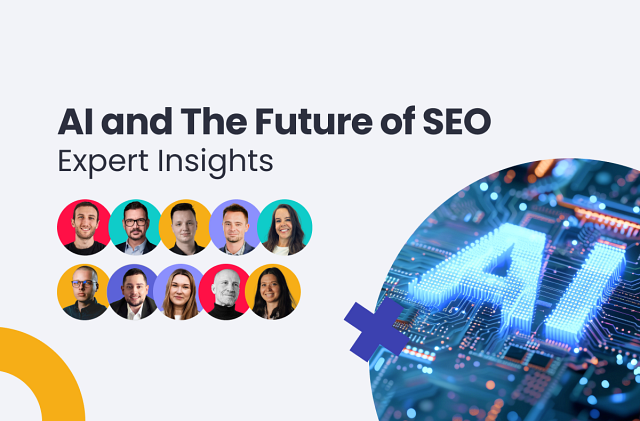
We invited 12 industry experts to share their perspective on the dynamic changes shaping the SEO landscape:
- Jindřiška Rennerová – SEO Specialist, Optimio.
- Jorge Castro – SEO expert, Founder of JorgeCastro.AI
- Itamar Blauer – SEO expert &
Enterpreneur - Hans Sandblom – SEO Master w: Memorise AB
- Lotta Hildeqvist – Head of SEO and Senior SEO Specialist at Beet
- Patrik Rojan – Cofounder &
SEO Strategist at Mixtazure - Bart Magera – SEO &
AI Consultant - Sabine Ljunggren – Senior SEO Specialist and Partner at Maia
- Jaroslav Uram – SEO Team Leader, Visibility
- Katarina Dahlin – Founder at Dahlin SEO
- Michal Gališin – SEO specialist, Visibility
- Asztalos Levente – Head of SEO at Klikkmánia Kft
We posed four key questions to each expert:
- What will be the biggest challenge in AI-driven SEO over the next three years?
- Which link building tactics are now obsolete, and which have become essential?
- How can brands build authority – and which tools should they leverage –to boost visibility in AI-generated answers?
- What is the #1 action companies should take today to future-proof their SEO?
Here is what these seasoned practitioners had to say:
What will be the biggest challenge in AI-driven SEO over the next three years?
Jindřiška Rennerová
The biggest SEO challenge in the age of artificial intelligence over the next three years will be… proving that SEO delivers real business value, not just traffic. Content will need to address users’ increasingly complex needs while also building the brand. As people increasingly receive answers directly from search engines and AI tools, it will become even more important to connect SEO with public relations, community building, and branding. The companies that succeed will be those that can combine high-quality content, a strong brand, data, and measurable business results.
Jorge Castro
The biggest SEO challenge in the age of artificial intelligence over the next three years will be… becoming the brand that the AI chooses to mention.
That means the next three years are when those prime spots get assigned. Whoever has their SEO foundation in place and starts building for AI responses now will gain a head start that will be very expensive for others to catch up to.
Itamar Blauer
The biggest SEO challenge in the age of artificial intelligence over the next three years will be… proving the value of search as more discovery happens inside AI-generated answers that never send a click back to your website. Brands will need to connect their visibility in AI answers to branded search, direct traffic and revenue, because rankings and sessions alone will no longer tell the full story.
Hans Sandblom
The biggest SEO challenge in the age of artificial intelligence over the next three years will be... to confirm that your business is legit and that you are the expert that you say you are. Creating EEAT-signals with evidence and in Schema Markup will within 2 years be mandatory in search.
SEO and Link Building in the AI Era
Master the new rules of AI-driven SEO and link building before your competitors do.
Lotta Hildeqvist
The biggest SEO challenge in the age of artificial intelligence over the next three years will be... keeping up with continuous developments and being visible across all the channels where users actually search.
Patrik Rojan
The biggest SEO challenge in the age of artificial intelligence over the next three years will be… being the source AI assistants trust in smaller-language markets. Ask ChatGPT or Gemini a commercial question in Romanian and the answer often leans on a handful of local sites, or on translated English sources that know little about the local market.
Bart Magera
The biggest SEO challenge in the age of artificial intelligence over the next three years will be... maintaining visibility in search results that no one clicks anymore. AI Overviews and model-generated answers are taking over the top of the funnel, and informational traffic will inevitably drop.
This process is irreversible. The challenge isn't how to win those clicks back, but how to become the source that AI cites – and how to shift the focus of your strategy toward commercial queries, where users still need to visit a website to make a purchase. Companies evaluating SEO success based purely on organic traffic face tough years ahead. Those evaluating it based on revenue will thrive.
Sabine Ljunggren
The biggest SEO challenge in the age of artificial intelligence over the next three years will be... to continue delivering measurable business value as search behavior fragmentates across Google, AI answers, social platforms, and other discovery surfaces.
Jaroslav Uram
The biggest challenge in SEO over the next three years will be… finding proof in data that SEO activities matter – and that their impact reaches beyond search engines, including visibility in LLMs. Clients will increasingly ask for evidence that their SEO investment pays off, and that evidence will be harder to find in standard analytics. Building it from data will become one of the core responsibilities of every SEO specialist.
That’s why SEO specialists will need to think more strategically – not only about rankings, but about the client’s overall position in the market and the places where the brand needs to be present and visible.
Katarina Dahlin
The biggest challenge in SEO over the next three years will be... balancing speed with quality. Everyone will use more and more AI, and that’s fine. But it also means more and more bad AI content. So be really careful with what you publish on your own website. Avoid AI slop and commodity content. Focus on quality. You need to be fast in SEO, but you don’t want to scale bad content. Keeping the quality while moving fast will be a challenge for many.
Michal Gališin
The biggest SEO challenge in the age of artificial intelligence over the next three years will be... understanding that customers may need our websites less than we marketers.
AI will increasingly influence customer decisions, and a growing part of the buying journey may happen without visiting a website. Yet, as marketers, we still tend to think primarily in terms of traffic and conversions because these are the metrics we can easily measure and attribute to our activities. However...
That’s why we should be careful with conclusions like, “AI only drove 1% of our traffic last month, so it’s not important yet.” This kind of thinking can significantly underestimate AI’s actual impact on customer decision-making.
Asztalos Levente
The biggest SEO challenge in the age of artificial intelligence over the next three years will be... keeping up with the fact that search is no longer happening in one place. Google rankings will still matter, but they are only one part of the picture now.
People are getting answers from AI tools, summaries, recommendation engines and search features that often do not result in a click at all. For SEOs, the real challenge will be figuring out how to measure visibility in this much more fragmented environment, and how to make sure a brand is not only ranking, but actually being mentioned, cited and recognized as a credible source.
Which link building tactics are now obsolete, and which have become essential?
Jindřiška Rennerová
Obtaining links solely for the sake of quantity is outdated. Search engines are increasingly filtering out and often simply ignoring cheap AI-generated articles, irrelevant directories, mass guest posting, and links from low-quality websites.
We can now also track which sources AI systems draw on. It therefore makes sense to seek a presence in those places. This does not always have to involve an actual link; a credible brand mention in a relevant context can be valuable in its own right. Link building is thus becoming increasingly connected with digital PR, brand building, and analysing where a brand is genuinely being discussed and where both users and AI systems obtain their information.
Jorge Castro
Obsolete is anything built on quantity instead of relevance: private blog networks (PBNs), directories, guest posts on sites that no human ever reads, and churned-out exact-match anchor text.
Itamar Blauer
Private blog networks, mass directory submissions, link swaps and templated outreach at scale have all run their course, and Google now simply ignores most links that exist purely for SEO.
Placing well-written articles on sites that match your niche and target market builds links that Google trusts. It also earns the brand mentions that AI platforms rely on when deciding which companies to recommend.
Hans Sandblom
Dead or obsolete techniques are PBNs (Private Blog Networks with random articles), directory submissions, generic guest posts, footer/
Lotta Hildeqvist
Obsolete In the past, link building was heavily focused on quantity –such as PBNs, large-scale link exchanges, directories, forum links, and guest posts created primarily to acquire a link with specific anchor text. A high DR often outweighed relevance and actual traffic. Today, many of these methods are obsolete. Search engines are significantly better at identifying unnatural link patterns and manipulative practices.
Must-Haves Modern link building revolves around relevance, quality, and authority instead. Links and brand mentions should originate from credible sources that are relevant to your business and ideally visible where your target audience actually hangs out. It is also crucial that these sources drive real traffic, cater to your target markets, and maintain a healthy, spam-free link profile.
Link building has become increasingly complex, and to ensure you get it right, it's a good idea to seek help from experts like WhitePress.
Patrik Rojan
Links bought purely for Domain Rating on sites with no real audience, „write for us” farms and repeated exact-match anchors have stopped working (yes, we still see profiles built this way). What matters now are links and mentions on the pages AI assistants cite: „best X in Romania” roundups, comparison pages, niche forums, local news. We collect those URLs from real prompts and use them as our target list.
Bart Magera
Mass guest posting on sites created solely to sell links no longer works. Google is getting better at identifying websites without real traffic or a genuine brand presence, and a link from a site that doesn't rank for anything itself passes zero value. Google simply ignores these links.
A single link from a relevant site with real traffic achieves more than fifty links from private blog networks (PBNs). Topical relevance and organic traffic outweigh high DR alone – especially in local SEO.
Sabine Ljunggren
Mass outreach, irrelevant guest posts, and links built solely to manipulate rankings... What is becoming increasingly important, on the other hand, is digital PR, proprietary data, expert content, and material that genuinely deserves to be cited and linked to. Relevance and credibility beat volume every time.
Jaroslav Uram
What’s obsolete is buying links just for the sake of having them, along with chasing third-party metrics such as Domain Rating or Domain Authority while losing sight of the bigger picture.
What’s essential is placing links in the right context – where they’re genuinely useful to the customer or reader.
Katarina Dahlin
Looking only at domain rating has always been out. You need to look at many factors. If we order sponsored articles, we need to be even more careful that we do it well. Build more branded links than exact match links, vary your anchors, and carefully choose the publishers you buy sponsored articles from.
The publisher sites always had to be relevant, but now it’s even more important. And ask: do we get anything from this? It’s now also essential to include positive things about your brand. That way you feed LLMs in the same way as you build strength for Google.
Michal Gališin
I look at link building less in terms of specific tactics and more in terms of the value they bring to a brand.
This could be a relevant mention in an industry publication, an independent review, an expert citation, or a recommendation from a trusted source. It doesn’t always have to include a backlink. What matters is that the brand appears in the right context and that a third party validates something the brand claims about itself.
Backlinks remain important, but they shouldn’t be the only goal. What I consider outdated is the approach where link-building success is measured by the number of links acquired rather than the actual value they bring to the brand.
Asztalos Levente
I think the era of building links mainly for the sake of having more links is clearly coming to an end. Mass guest posting, irrelevant placements, weak directories and links on sites that have no real audience or topical connection are becoming less useful. In many cases, they may still move a metric in an SEO tool, but that does not necessarily mean they are creating real value.
What matters much more now is where the link comes from, why it is there and whether the source itself has credibility in that topic. For me, digital PR, expert commentary, original research, useful data and genuinely strong content are becoming much more important. A good link today is not just a link. It is also a signal that another credible source is willing to associate your brand with a topic.
How can brands build authority – and which tools should they leverage – to boost visibility in AI-generated answers?
Jindřiška Rennerová
Primarily through the consistent development of expert credibility – by creating high-quality content, publishing case studies and expert opinions, gathering testimonials, and earning mentions on trusted websites. Structured data, entity-based optimization, and regularly testing how AI tools describe the brand can also help.
However, a brand cannot build authority in AI simply by following a checklist. Its authority is based primarily on how it actually operates in the market, its experience and reputation, and how it is perceived by customers and industry professionals.
Useful tools include Google Search Console, Bing Webmaster Tools, and the paid platforms Ranketta/
Jorge Castro
The AI doesn't trust what you say about yourself. It trusts what others say about you across multiple reputable places and in the right context. Authority is therefore built on top of a strong SEO foundation, but largely takes place outside your own website: in media outlets, industry publications, test reviews, customer reviews, and forums where your brand is discussed alongside the topics you want to be known for.
When it comes to tools, I would start with measurement.
That's precisely why I built CASTRO AI. Without that telemetry, you're optimizing completely blind.
Itamar Blauer
Brands need to be mentioned consistently on the sources AI platforms read and cite, such as industry publications, review sites and communities like Reddit. Publishing original data and keeping your entity information consistent across your website and third-party profiles makes it far easier for models to trust and reference you. For the most accurate tracking, I'd recommend platforms like GA4, since there are no proprietary analytics within LLMs currently (as of September 2026).
Hans Sandblom
Treat E-E-A-T as a real-world footprint, not a checklist. Get recognized industry experts to author content, claim your brand entities, get cited on high-trust platforms (Wikipedia, industry media, podcasts), and publish original data AI can’t just guess or hallucinate.
Lotta Hildeqvist
Authority essentially rests on three pillars. First, the entity: AI platforms and search engines need to understand who you are, what you do, and how everything connects. This requires consistent brand communication and presence in credible entities like Wikidata and established industry media.
Second comes E-E-A-T (Experience, Expertise, Authoritativeness, Trust). Content must clearly signal hands-on experience, expertise, and trustworthiness through author profiles, first-hand insights, relevant citations, and up-to-date timestamps. Finally, the technical infrastructure: AI web crawlers must be able to discover and parse your content, and answers should be clearly structured so they can easily be extracted and cited.
The most important step is choosing one tool for AI visibility tracking and measuring consistently with it. Metrics vary widely between tools, so combining two often yields false precision. Personally, I use complementary tools to get the clearest possible picture available today.
Patric Rojan
Describe your company the same way everywhere: website, Google Business Profile, LinkedIn, directories, partner pages. If sources disagree, the model guesses or leaves you out. Then give people a reason to mention you, like data from your own projects.
For measurement, we start with the AI performance data in Google Search Console and the Copilot AI performance data in Bing Webmaster Tools. On top of that we use brand and prompt tracking tools, but we don't stick to one (answers in Romanian or Hungarian often differ from the English ones most tools track).
Bart Magera
Brand authority in the AI era is built on entity consistency. The model needs to know who you are, what you do, and what topic to associate with you. In practice, this means focusing on one clear specialization rather than ten different topics, maintaining consistent brand data across the entire web, and writing content structured for easy answer extraction: short paragraphs, definitions, comparison tables, and hard numbers instead of generalities.
The best indicator of progress is growing brand search volume. As for tools, there are currently no tools that accurately track visibility in AI answers – manual checks are still required.
Sabine Ljunggren
Brands need to build a clear and consistent expert profile across multiple trustworthy sources – not just on their own website. This means leveraging proprietary studies, in-house experts, PR, structured data, and mentions in relevant industry media. It goes hand in hand with a strategic and well-thought-out overall brand strategy.
In my daily work, I still rely on the classic Ahrefs, but I also use AnswerThePublic to capture questions and prompt ideas, as well as AccuLLM to track visibility within AI answers.
Jaroslav Uram
Authority starts with honest, systematic brand building – consistently proving that your company is reliable and trustworthy. There are no shortcuts. Publishing PR articles while neglecting your product, customer service or reputation won't work for long, because both users and AI systems will eventually recognize that you're not a real authority. Visibility in AI-generated answers is still largely built on solid SEO, but it's more complex than that.
On the tooling side, combine classic SEO data from Google Search Console and Ahrefs with brand mention monitoring and dedicated AI visibility tracking in Marketing Miner, so you can measure how often and in what context AI tools mention your brand.
Katarina Dahlin
The tools can be tricky, as we will never be able to track as many prompts as there are AI searches. I use a combination of tools and metrics: SurferSEO, brand searches, AI impressions in Search Console, and AI referral traffic in GA4. Work on making your website fast, and if it is JavaScript-heavy, make sure the important things are in the source code as well.
Michal Gališin
Building authority in the context of AI is not that different from traditional brand building, which I think we’ve somewhat neglected in the era of performance marketing. Brands are already appearing in AI-generated answers today, often without actively doing anything related to GEO. This is the result of their existing information footprint across the digital landscape, what other websites, publications, customers, and industry experts say about them.
However, in the context of AI, I would emphasize one thing: brands need real evidence to support their claims. It’s not enough to state on your website that you’re the best, most reliable, or most experienced. You need specific attributes, results, or experiences that back up these claims. More importantly, they should be independently verifiable, not just marketing statements.
I believe this should be the foundation of any authority-building strategy. First, identify what your brand is genuinely good at and what makes it different. Then make sure that evidence of these qualities exists beyond your own communication channels.
Of course, there are plenty of SEO and GEO tools that can help monitor brand visibility in AI-generated answers, mentions, and cited sources. But before we start tracking another set of metrics, we should understand how our customers actually make decisions and what role our brand plays in that process.
Asztalos Levente
The first thing I would say is that brands should stop thinking only about what is published on their own website. If a company wants to appear more often in AI-generated answers, it needs to be visible in the wider information ecosystem as well. That means industry publications, expert articles, interviews, reviews, research, databases and other independent sources. AI systems are much more likely to trust a brand when they repeatedly see the same expertise confirmed by different sources.
From a technical point of view, the basics still matter: clean site structure, structured data, clear authorship, strong internal linking and content that answers questions directly.
For measurement, I would not focus too much on trying to turn AI visibility into another traditional ranking report. I would rather track brand mentions, citations, share of voice, the range of queries where the brand appears, and whether AI platforms are actually sending traffic.
What is the #1 action companies should take today to future-proof their SEO?
Jindřiška Rennerová
They should start treating SEO as part of their overall marketing and business strategy, rather than simply as a tool for generating organic traffic. Companies should invest in high-quality content, a strong brand, and credibility, while also monitoring how their brand appears not only in Google but also in AI-generated answers.
Jorge Castro
Find out what the AI is saying about you right now. Ask your customers' questions – repeatedly – and analyze how often you appear in the answers, as well as who gets mentioned when you don't. A single isolated response tells you nothing; it's the recurring pattern that counts.
That gives you your true baseline, which might look radically different from your traditional Google rankings. Right now, these models are learning which brands belong to which subject areas. Anyone who waits two years will be trying to force their way into an answer that has already been written.
Itamar Blauer
Ask ChatGPT, Perplexity, Gemini and Google's AI Mode about your brand and category the way a customer would. Seeing whether you appear, how you are described and which sources are being cited gives you a clear roadmap for your content and link-building, along with a baseline to measure future progress against.
Hans Sanblom
Implement clean, bulletproof advanced Schema Markup across all core entities for undeniable real-world E-E-A-T. Give AI machines the structured „catalog cards” they need to verify who you are, that you have experts as you say, what you do, and why they can trust your data).
Lotta Hildeqvis
While there are many critical actions you can take today, if I had to pick just ONE, it would be verifying that your site's most important pages are actually indexed. If a page isn't in the search engine's index, it stands zero chance of appearing in traditional organic search results.
...Okay, one quick extra if I may bend the rules slightly: strengthen your brand by building authority and credibility! This will only become more critical as search evolves and AI assumes a larger role.
Patrik Rojan
Write down 20 to 30 questions your customers ask before buying, in every language you sell in, and run them through the main AI assistants monthly. Note who gets mentioned and which pages are cited. That list tells you where your content and link building budget should go.
Bart Magera
Build a topical map around a single core entity and prune content from the website that doesn't serve it. Most corporate blogs consist of hundreds of random posts that dilute the topical signal. Having less content with complete coverage of a single topic beats high volume written about everything. This works for both Google and AI responses, as both systems reward sources that cover a topic comprehensively. This can be started this quarter and doesn't require a budget – just a decision.
Digital PR by WhitePress®
Earn high-impact editorial placements in leading industry, national, and global media to build lasting brand authority.
Sabine Ljunggren
Stop treating SEO as a separate channel. Today, SEO is interconnected with brand building, PR, content, and how your company is visible and mentioned elsewhere. The earlier you start working more integrated with these areas, the better prepared you'll be as search behavior continues to evolve.
Jaroslav Uram
Step zero is to analyze how dependent your business is on organic search and how much demand for your offering exists in search engines. Every company should do some SEO, but this analysis tells you how to prioritize between SERP rankings and visibility in LLMs.
When it comes to implementation, stick to the basics: proper technical setup, crawlability, accessibility, a landing page structure that mirrors search demand, a content strategy, and PR and brand mentions.
Don't jump to step two or three until you're 100 % sure you've covered everything you should have – or everything your competitors already have.
Katarina Dahlin
Work on brand reputation management. Feed LLMs with good things about your brand. Work on off-page SEO and on building a good brand. Work on your products and services so people say good things about your brand. Figure out your positioning in the market, where you stand, and feed it into LLMs so AI will repeat it.
Michal Gališin
I often see companies rushing into GEO without understanding what it means or what they want to achieve. They treat it as a separate discipline from SEO and apply the same expectations they have for performance marketing. They want to measure AI-driven clicks, directly attribute conversions, and evaluate success based on those numbers.
But this brings us back to the same problem. We’re trying to measure a new way of making purchasing decisions using old metrics. If AI influences a customer’s decision, but they later visit your website through Google, direct traffic, or purchase elsewhere, traditional analytics won’t capture that influence.
SEO, GEO, content marketing, PR, and brand building shouldn’t be treated as isolated activities. They all contribute to the same goal, making your brand visible, credible, and relevant when customers make decisions. Only then does it make sense to discuss specific tactics, tools, and metrics.
Asztalos Levente
Choose the topics you genuinely want to be known for, and build authority around them consistently. A lot of companies still publish content based on individual keywords without thinking enough about the bigger picture. I think that approach will become less effective.
If you want search engines and AI systems to recognize your company as a trusted source, you need depth, consistency and external confirmation around the same core topics. That means good content on your own site, expert input, original insights or data, and mentions from credible third-party sources.
If our twelve specialists agree on one core truth, it’s that the era of chasing empty clicks and gaming algorithms is officially over. Moving forward, AI will not reward who shouts the loudest on their own domain, but who commands genuine authority across the entire web. The next three years will decide which brands secure those permanent spots in AI-generated answers—and the groundwork starts today.

Digital Marketing Manager